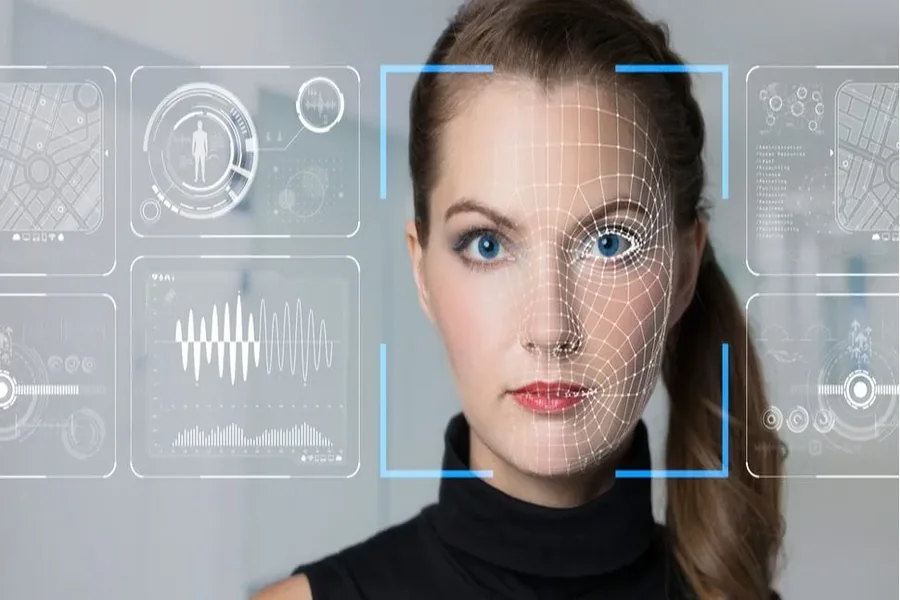
Images, audio, and video used to function as strong evidence. Today, machine-generated media can clone a face, mimic a voice, or stage an event that never happened. The consequence is a shift from “proof by sight” to “trust by process.” Security leaders now need policies for authenticating media, not only systems for blocking malware.
Deepfakes also exploit attention. Attackers use urgency, novelty, and social cues to rush decisions: a “CEO” in a video call approving a transfer, a “vendor” sending a new banking form, a “colleague” asking for credentials. The trap works because it feels real and because people prefer quick closure over slow checks; for an unrelated illustration of how short-cycle rewards capture focus, read more, then consider why modern defenses must slow the moment of decision long enough to verify.
Contents
- From Visual Proof to Probabilistic Trust
- The Expanding Attack Surface
- Detection Is Necessary, Not Sufficient
- Content Provenance and Device Signatures
- Verification Rituals for High-Risk Actions
- Training for Recognition and Response
- Legal, Compliance, and Evidence Handling
- Building Trust Into Communications
- Metrics: New Indicators of Trust
- Procurement and Third-Party Risk
- Consumer Guidance Without Panic
- Research and Collaboration
- A Practical 60-Day Plan
- Conclusion: Trust as a Workflow
From Visual Proof to Probabilistic Trust
Security practice has moved before: from perimeter defenses to zero-trust network models. Media authentication needs a similar pivot. Instead of treating photos or voices as proof, treat them as signals to be scored. Who created the content? What device signed it? Is there a chain of custody? Are there inconsistencies in lighting, reflections, or acoustics? A single artifact rarely settles the question; a bundle of checks can.
The Expanding Attack Surface
Deepfakes increase the reach of familiar attacks:
- Business email compromise, upgraded: fake voice notes or brief video snippets ask finance staff to bypass controls.
- Credential harvesting: staged “IT support” clips walk users through fake resets.
- Market and reputation manipulation: fabricated remarks influence pricing or public perception.
- Harassment and doxxing: altered media targets individuals to coerce or silence.
The medium changes; the principle does not. Attackers aim to trigger fast, high-impact actions before scrutiny.
Detection Is Necessary, Not Sufficient
Automated detectors look for spatial, temporal, and acoustic artifacts: pulse inconsistencies in faces, unnatural blink rates, odd mouth-phoneme alignment, or spectral signatures in voice. But detectors are adversarial games; as models improve, artifacts shrink. Treat detection as a filter to raise suspicion, not as a courtroom verdict. Pair it with provenance, signatures, and process.
Content Provenance and Device Signatures
The stronger control is content credentials: cryptographic signatures bound to media at capture time that record where, when, and how the file was made and whether it has been edited. If the signature is missing or broken, the item moves to a high-scrutiny lane. Organizations should test cameras and recording tools that can sign outputs, and set policies to accept only signed media for critical workflows—procurement changes, incident evidence, or compliance reports.
Verification Rituals for High-Risk Actions
Technology alone cannot carry the load. High-risk actions need rituals—explicit, repeatable steps that slow a request long enough to test it:
- Out-of-band callbacks: confirm payment instructions or access grants via a verified phone number from the corporate directory, not from the message.
- Two-person rules: require a second approver who receives independent context, not the same video clip.
- Time buffers: enforce a cooling-off period for irreversible transfers.
- Challenge-response cues: pre-shared phrases or gestures that are easy for humans, hard for forgers without inside knowledge.
These rituals are the human equivalent of multi-factor authentication for decisions.
Training for Recognition and Response
Awareness programs should move beyond generic warnings. Teach staff to notice contextual tells: a leader appearing at an unusual hour, an accent shift, a camera angle that never changes, instructions that bypass ticketing systems, or a demand for secrecy. Run drills that combine inbox messages, voice calls, and short videos so teams practice escalating without fear of “bothering” seniors. Reward correct skepticism even when the request is legitimate; otherwise, people learn that speed is valued over safety.
Legal, Compliance, and Evidence Handling
If an incident involves forged media, evidence handling matters. Maintain a hash registry for all received files, store originals in write-once locations, and log every access. For internal investigations, keep a clean chain of custody and record which tools were used to analyze content. Policies should define how to notify regulators, clients, or the public when deepfakes target the organization, and who approves takedown or counter-messaging.
Building Trust Into Communications
Organizations should publish a sender policy for official communications: channels used, signing practices, and how recipients can verify. For public video statements, include visible content credentials and a stable verification page. Internally, route executive requests for money, data, or credentials through ticketed systems that leave an immutable audit trail. When communications are predictable, anomalies stand out.
Metrics: New Indicators of Trust
Traditional dashboards track phishing rates or patch coverage. Add media-trust metrics:
- Time-to-verify for high-risk requests.
- Percentage of critical media with valid signatures.
- Escalation rate from frontline staff, measured without penalty.
- Detector precision/recall on curated test sets that include audio and video.
- Incident rehearsal frequency and post-exercise remediation time.
These indicators shift attention from volume of training to quality of verification.
Procurement and Third-Party Risk
Vendors will send invoices, statements, and product videos. Contracts should require signed media for sensitive instructions and specify liability for forged communications that exploit a vendor’s process gaps. Run joint drills with key partners; attacks often cross boundaries, and response speed depends on shared expectations.
Consumer Guidance Without Panic
Public audiences need clear advice that does not paralyze them. Offer three steps: pause, cross-check, report. Pause when media triggers strong emotion. Cross-check via an independent source or known channel. Report doubtful items to a visible address. Trust is not the absence of doubt; it is the presence of method.
Research and Collaboration
No single team will solve the problem. Join industry groups that share sample sets and red-team techniques; invest in dataset hygiene to avoid bias; support open standards for provenance so tools interoperate. Universities and civil society can help benchmark detectors and study the social effects of exposure to forged media, which inform better training.
A Practical 60-Day Plan
- Map high-risk decisions that rely on audiovisual evidence.
- Enforce callbacks and two-person approvals for those decisions.
- Pilot signed capture for executive announcements and incident evidence.
- Adopt a detector as a triage layer; tune it on your content.
- Run a blended drill (email + voice + video) and publish lessons.
- Update policies to cover storage, takedown, and public response.
- Publish a verification page describing official channels and signatures.
Conclusion: Trust as a Workflow
Deepfakes do not end truth; they end shortcuts to truth. In cybersecurity, the fix is not nostalgia for a time when a voice on a line or a face on a screen settled questions. The fix is building verification into everyday work: signed capture at the source, layered detection, human rituals for high-risk actions, and metrics that reward careful confirmation. When trust becomes a workflow rather than a hunch, seeing can be the start of believing again—not the end.